“Frankenchickens” and the problem with welfare certification
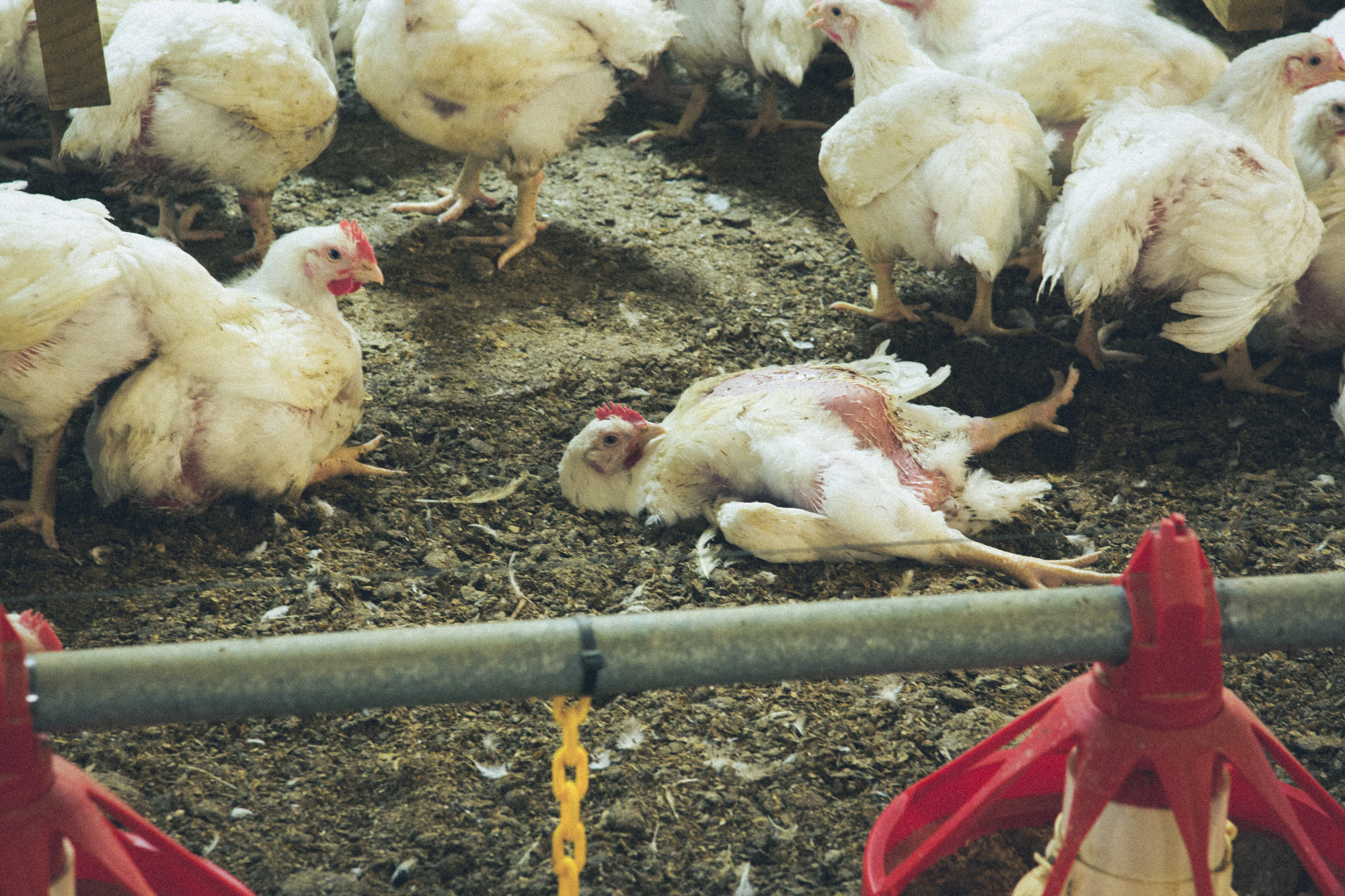
Reported by RNZ, the footage shows fast-growing chickens with obvious mobility problems at two Tegel farms, including birds struggling to walk and others lying on their backs, unable to right themselves.
It was only after RNZ questioned the SPCA that it published a new voluntary standard for chickens bred for meat.
The chickens have been dubbed “Frankenchickens” because their bodies have been selectively bred for extraordinary rates of growth. In just a few weeks, tiny chicks transform into birds many times their original size.
The problem is that their skeletons and organs cannot cope with that pace of growth. The result can be lameness, skeletal damage, heart problems, and an inability to move normally.
One of the most shocking things about this evidence is how long we’ve had it.
A 2013 study commissioned by the Ministry for Primary Industries (MPI) found that more than 30% of chickens showed an obvious abnormality affecting their ability to move, rising to almost 56% among the heaviest birds.1 New Zealand’s own National Animal Welfare Advisory Committee (NAWAC) has also raised concerns that chickens have been selectively bred “beyond a point that is compatible with survivability.”2
So this is not a new problem, and Frankenchickens are not a freak accident. They are factory farming operating exactly as intended.
What exactly is being certified?
SPCA Certified is intended to give consumers confidence that animals have been treated to a higher standard than the legal minimum. SPCA describes its certification as helping to raise standards of care “well beyond legal requirements” and providing a good life for New Zealand’s animals.3
But what does that mean when the underlying system is itself designed around producing as much meat as possible, as quickly and efficiently as possible?
Chickens used for meat are raised in large numbers within tightly controlled industrial systems, and many of the welfare problems associated with them are a direct consequence of that production model.
SPCA’s own position acknowledges this. It says the welfare problems associated with conventional fast-growing chickens are “well documented”, including lameness and cardiovascular problems. SPCA has also described chicken welfare as potentially the single biggest animal welfare issue today, given the scale of the industry and the degree of suffering involved.4
There is another confronting detail in the RNZ story: the farms were also free-range.
For many consumers, those words paint a reassuring picture – chickens outdoors, scratching in the grass, moving freely, and behaving naturally.
The reality can be very different. Commercial free-range chickens can be housed in sheds holding up to 40,000 birds, where they breathe ammonia-laden air and live among accumulating faeces and urine. Access to the outdoors is provided through pop holes around the perimeter of the building.
For a chicken whose body makes walking difficult, an open door is of limited value if she cannot get there.
“Free-range” tells us something about where chickens can go in theory, but much less about what their lives are actually like.
SPCA’s new standard is a step, not the destination
Since the footage was released, SPCA introduced a new voluntary “Welfare Plus+” standard that calls for a transition to slower-growing chickens. The crucial word is voluntary.
There is currently no deadline for the new standard to replace the existing baseline certification. That means the blue SPCA Certified badge can continue to appear on products from systems that use fast-growing chickens.
SPCA has defended this approach by arguing that slower-growing breeds are not currently commercially available in New Zealand, and that making them mandatory by a particular date could lead producers to leave the voluntary certification scheme altogether. SPCA says that if producers left the scheme, the chickens would still be farmed under existing legal requirements, but without the additional standards, oversight, and auditing provided by SPCA Certified.
There is a logic to wanting to improve animals’ lives today while working towards broader change tomorrow. But we also have to be honest about the limitations of this approach.
More space. Natural light. Perches and enrichment. Slower-growing breeds. These changes can make a difference to individual animals, but the underlying production model remains the same.
A slower-growing chicken is still bred for a commercial purpose. She is still confined within an industrial system designed around speed, scale, and efficiency. Her life is still measured in weeks. And she is still killed when she reaches a commercially useful size.
When “better” becomes the endpoint, rather than a step towards transformation, we can end up spending decades making an inherently exploitative system incrementally more palatable.
Meanwhile, millions upon millions of animals continue to be born into that system.
Certification obscures the truth about factory farming
The SPCA clearly does care about animal welfare. It has campaigned publicly against harmful practices and is now asking producers to adopt its new enhanced chicken welfare standard.
But certification plays a particular role in this system. When a trusted animal welfare organisation places its name on a product, it can give consumers confidence that the ethical questions surrounding its production have already been addressed.
That effect is particularly powerful in an industry where the realities of production are largely hidden from public view. That’s where welfare washing becomes a real concern.
That’s not to say the SPCA is deliberately trying to mislead consumers. The problem is that certification can create an impression of ‘humane’ production that exceeds what the standard actually guarantees.
This matters because factory farming thrives on distance – distance between consumers and animals, and between the product on the shelf and the reality of how it was produced. Certification schemes can preserve that distance by surrounding the system with enough reassurance to discourage closer examination.
The harms we regulate around
The issue runs much deeper than one organisation or one welfare standard. Behind every intensive farming system is a framework of laws, decision-makers and commercial practices that determine what animals can be subjected to and what levels of suffering are permitted.
New Zealand’s Animal Welfare Act recognises animals as sentient and requires that their physical, health, and behavioural needs be provided for. It also requires that animals be protected from ‘unreasonable’ and ‘unnecessary’ pain and distress. Yet these protections are shaped by what regulators determine is reasonable and necessary.
As it stands, this framework can accommodate chickens bred for extreme growth, raised by the tens of thousands, living in their own waste, suffering ammonia burns, and struggling to walk.
The welfare risks are known. MPI and NAWAC have acknowledged them. Yet the regulatory response has stopped short of confronting the systems that create them.
The law sets the boundaries of what society will permit animals to endure, and right now, those boundaries leave plenty of room for factory farming.
We need to zoom out
The Frankenchicken is a reminder of what often gets lost when we talk about animal agriculture through labels, standards, and production metrics.
The labels say free-range. The certification says higher welfare. The industry says progress.
Her body tells a different story. She carries the consequences of a system built around rapid growth, industrial scale, and production above all else.
New Zealand farms around 125 million chickens for meat every year – more than any other land animal by a substantial margin. If we are serious about animal welfare, we need to look beyond individual standards to the wider forces that push animals beyond the limits of what their bodies can withstand.
Welfare standards can improve conditions within those systems, while certification can make them easier to accept. But the response must go further.
We need to challenge the laws, assumptions, and commercial incentives that continue to treat animal suffering as an acceptable cost of doing business.
This is the purpose of our End Factory Farming campaign.
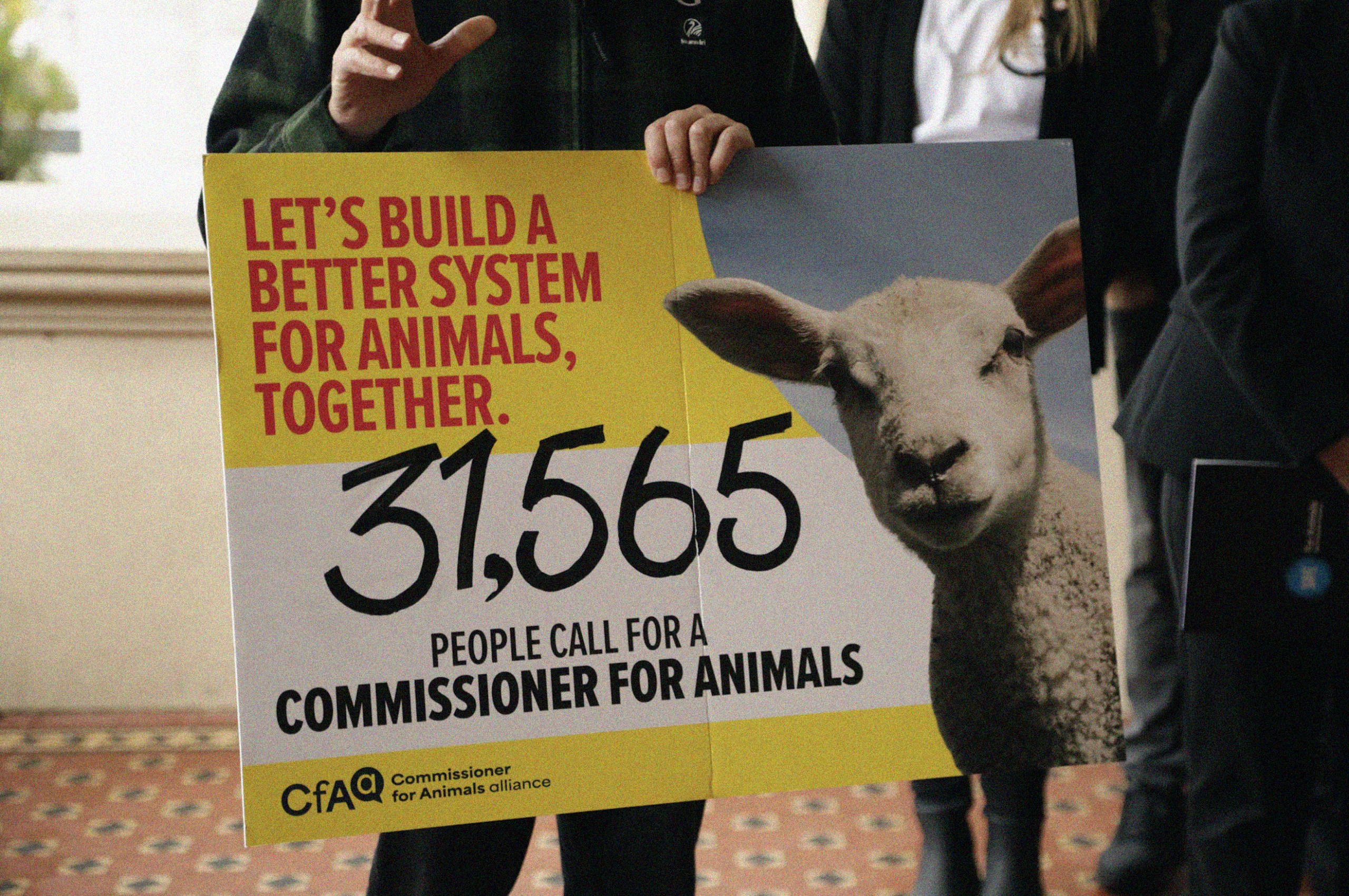
SAFE is calling for an independent review of New Zealand’s animal welfare legislative framework, followed by the reforms needed to end factory farming in Aotearoa.
Because animals deserve more than incremental improvements inside a system built around their exploitation.
They deserve a different system altogether.