SAFE launches national campaign to end factory farming in Aotearoa
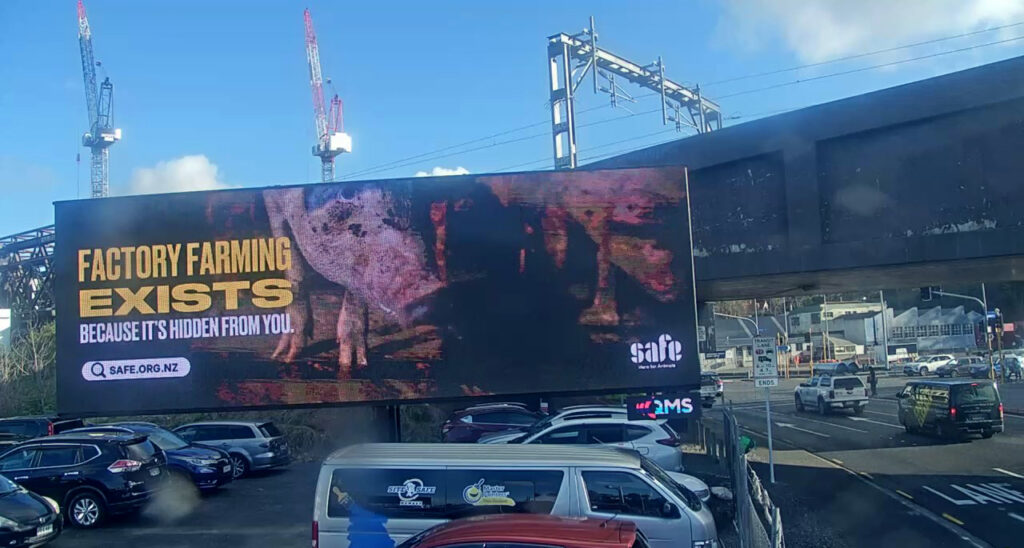
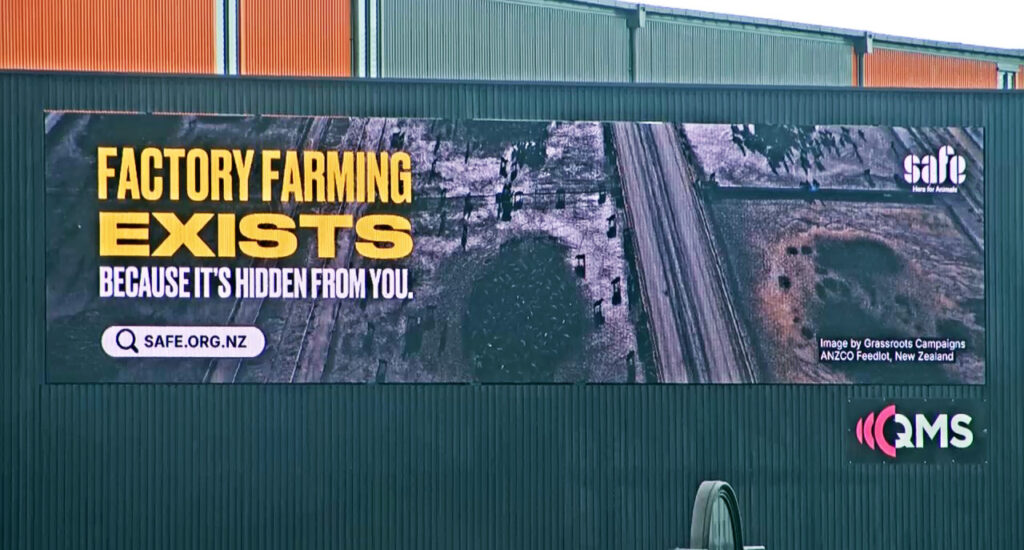
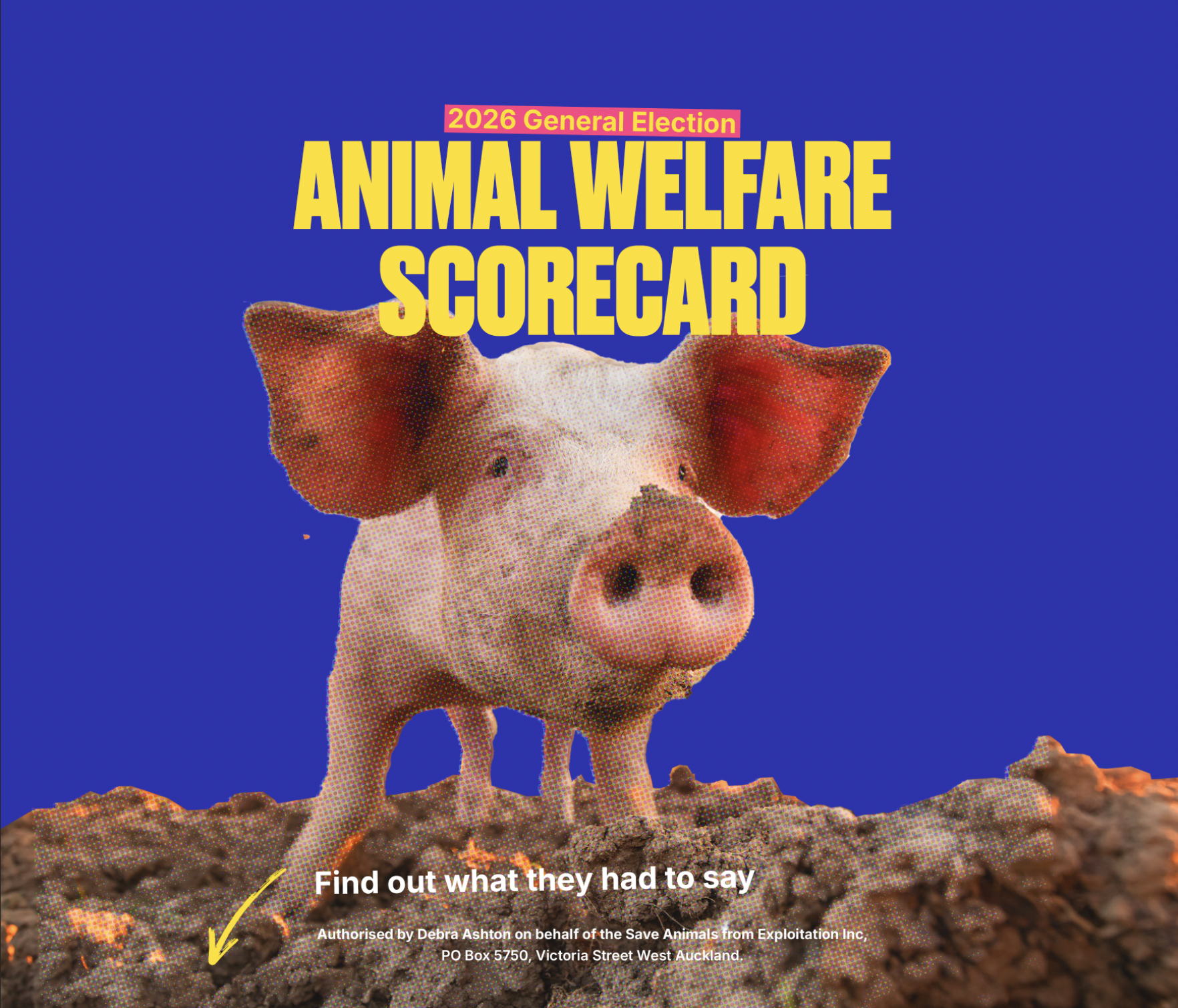
SAFE has launched a major new campaign calling for an end to factory farming in Aotearoa, backed by a public petition and a nationwide advertising campaign exposing the reality of intensive animal farming.
Table of Contents
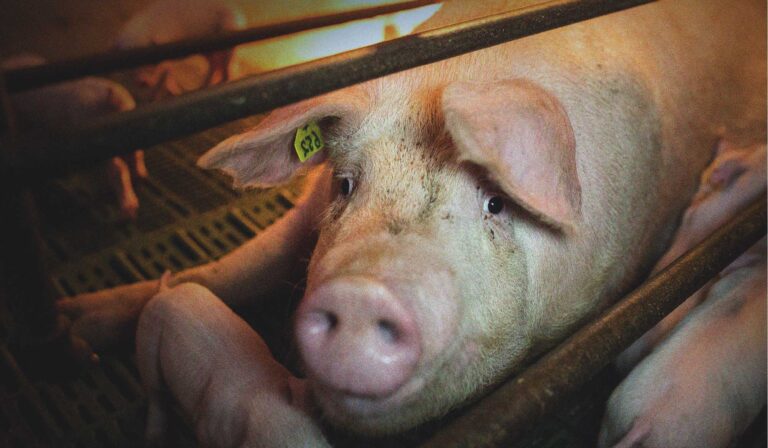
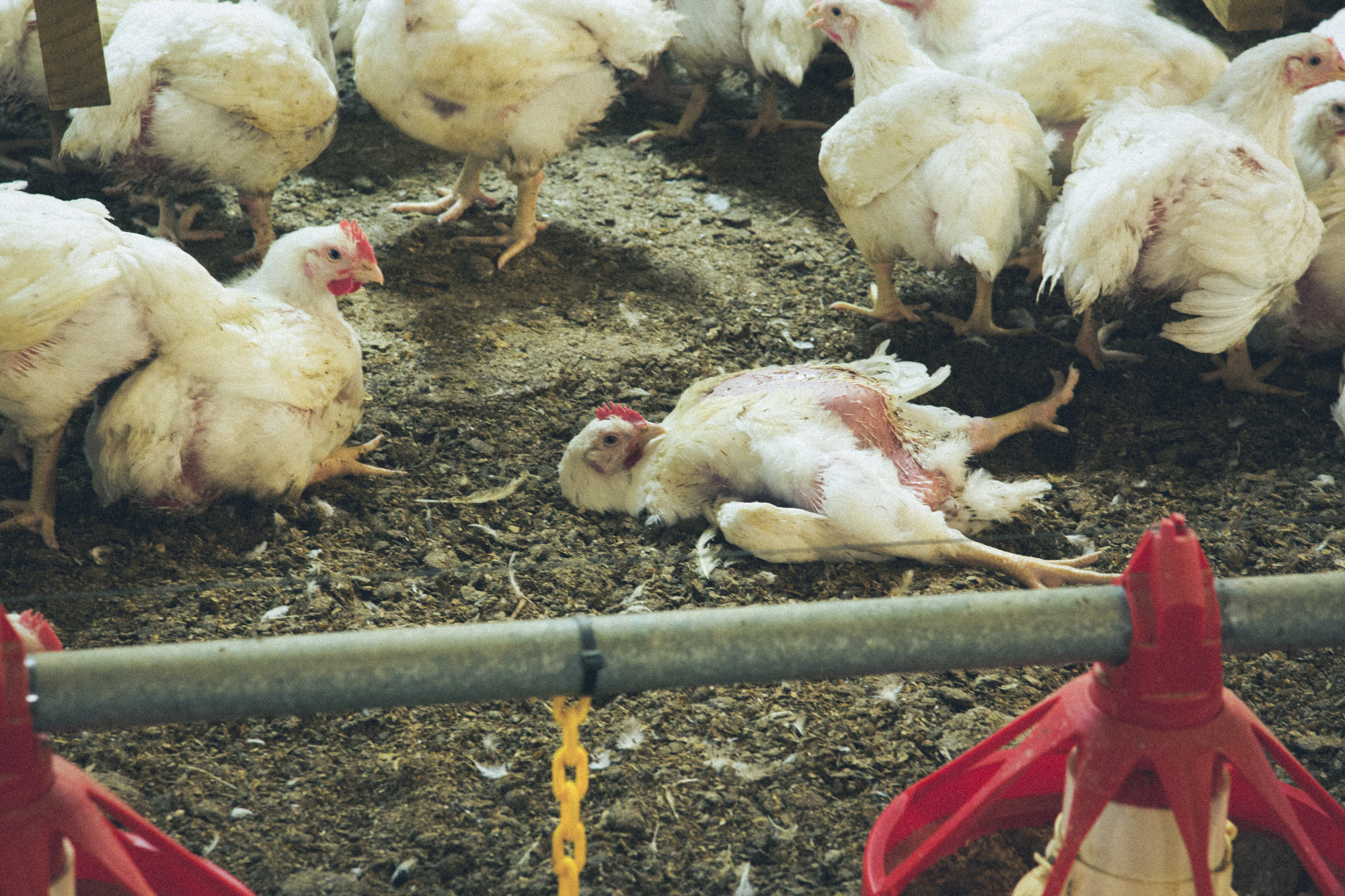
At least 128 million land animals are factory farmed in New Zealand each year, confined in systems that severely restrict movement, limit essential behaviours, and expose animals to injury, disease, chronic stress, and deprivation. Many are selectively bred for rapid growth or high production at the expense of their health, while painful procedures are used to manage the welfare problems that intensive systems create.
SAFE Campaign Manager Emma Brodie says factory farming is a systemic problem that demands a systemic solution.
“Factory farming treats extraordinary levels of suffering as business as usual.”
“In 2026, we should be asking whether cages, crates, and crowded sheds really belong in the future of Aotearoa.”
No public mandate for cruelty
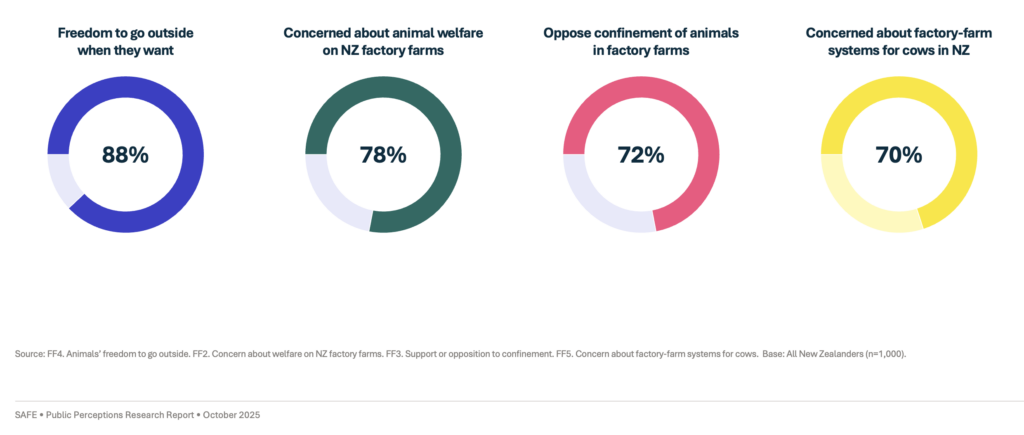
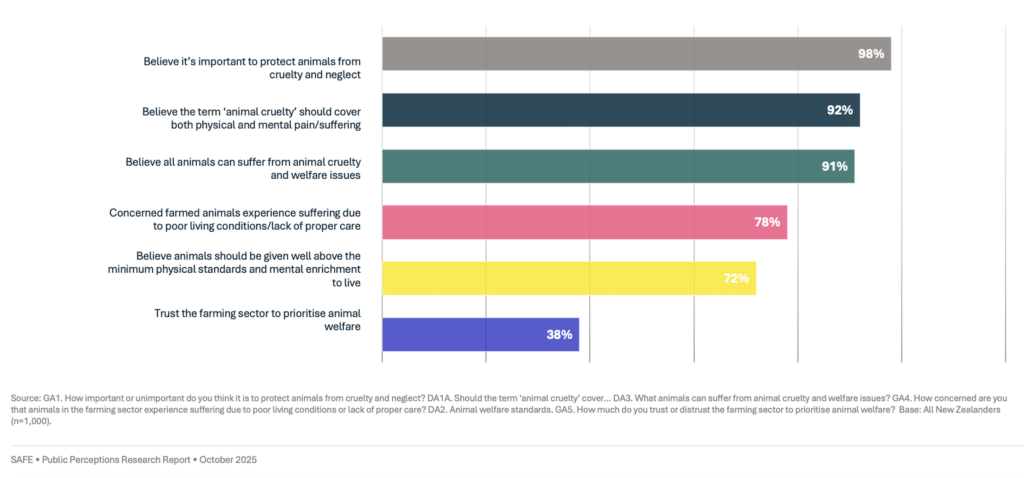
Verian research commissioned by SAFE in 2025 shows 78% of New Zealanders are concerned about the welfare of animals on New Zealand factory farms, while 72% oppose confining animals in factory farms. 88% believe animals should have the freedom to go outside when they want, and 93% believe codes of welfare should be regularly reviewed and updated to reflect the latest animal welfare science and public concerns.
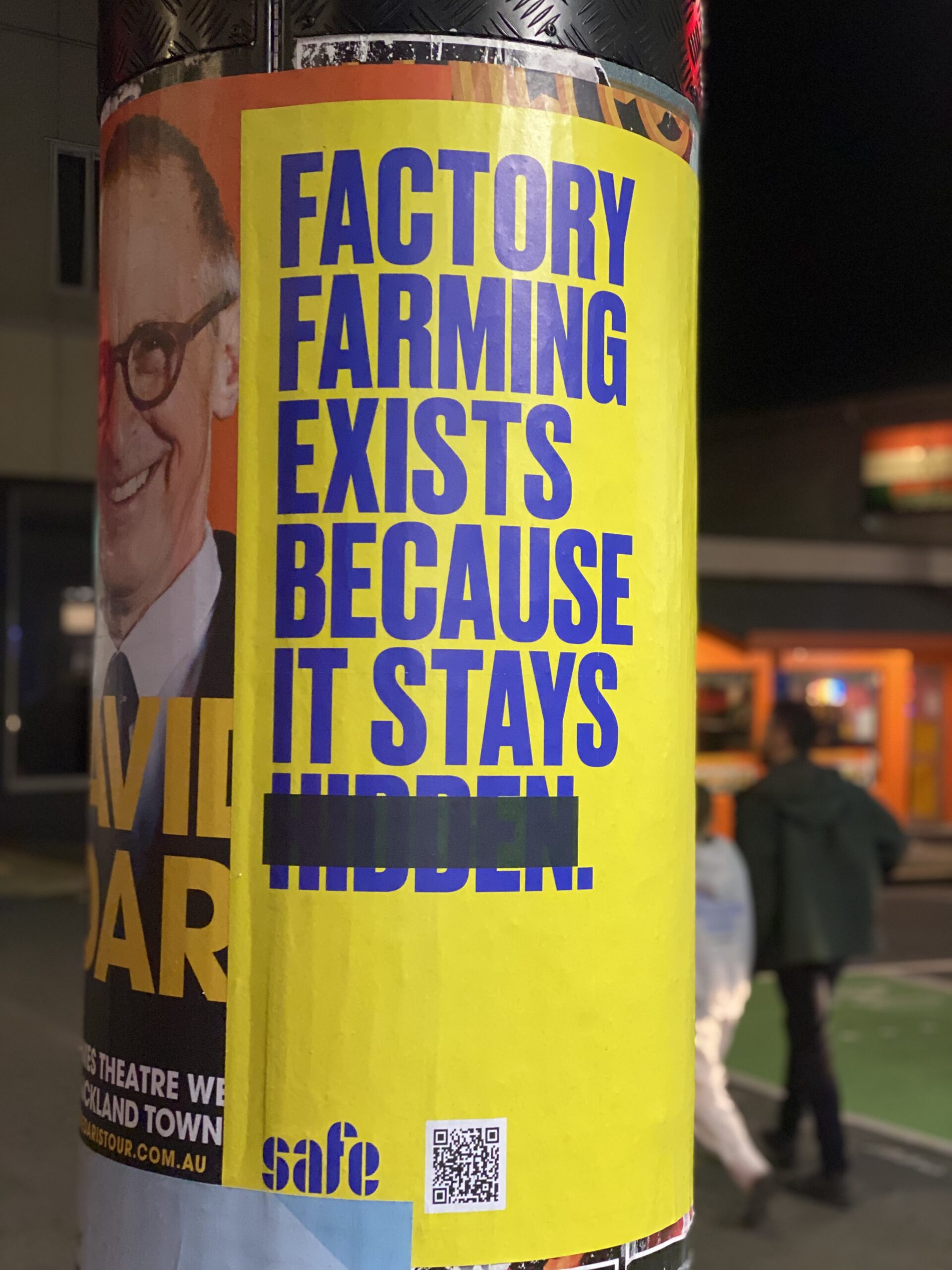
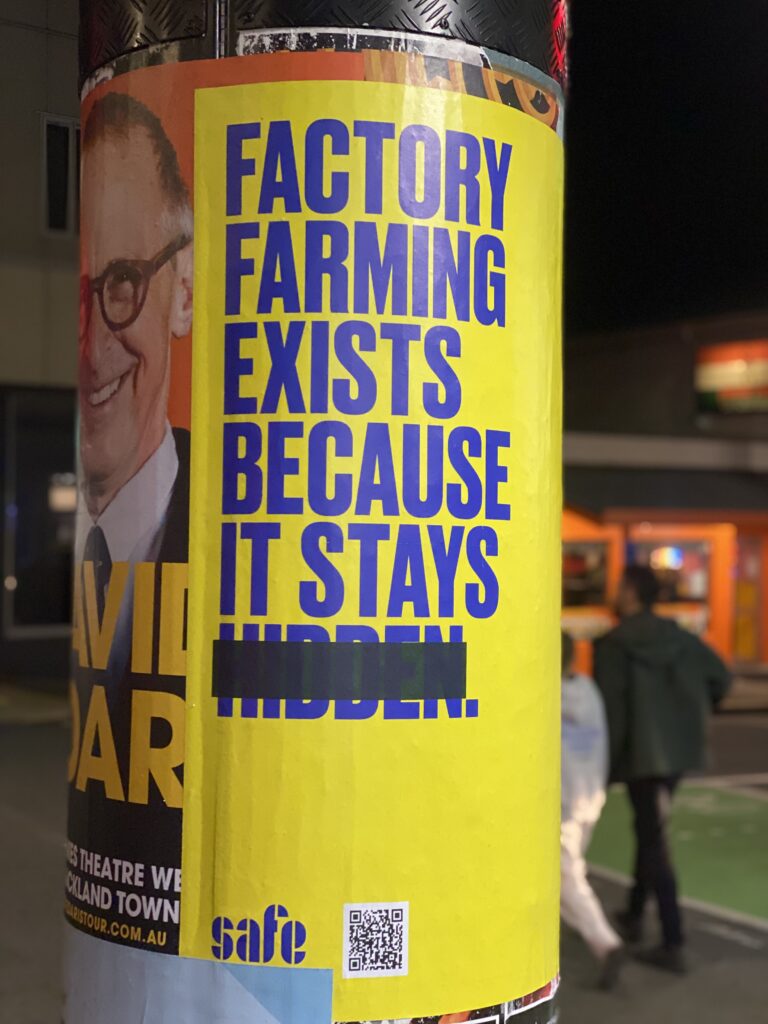
SAFE’s public awareness campaign aims to bring factory farming to light
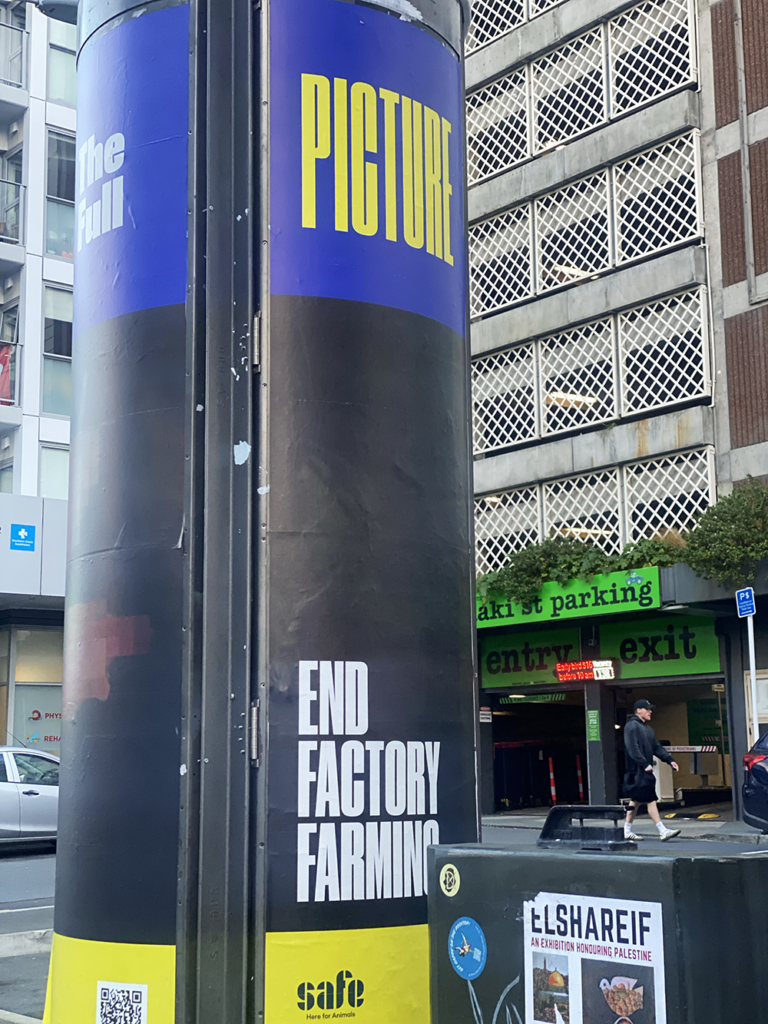
Brodie says factory farming doesn’t persist because New Zealanders don’t care about animals; it persists because most people don’t see it.
“The scale of factory farming in Aotearoa is enormous, but the full picture is still hidden from public view. That distance makes it easier for factory farming to continue unchallenged.”
“Our campaign is about bringing factory farming into the light, challenging the rules and structures that keep it in place, and turning public concern into meaningful change.”
What is our Petition calling for?
The campaign calls for an independent review of New Zealand’s animal welfare legislative framework, followed by the reforms needed to end factory farming systems.
More than 25 years after the Animal Welfare Act 1999 was enacted, SAFE says the framework is no longer fit for purpose. The law has not kept pace with what we know about animal welfare or addressed intensive farming systems that cause significant harm.
Recent decisions on the regulation of pig and hen farming have reinforced SAFE’s concerns, with the most intensive forms of confinement remaining permitted.
The Ministry for Primary Industries recently closed consultation on proposed changes to the code of welfare for layer hens. SAFE has raised concerns that the proposed standards fail to address some of the most intensive practices used in the egg industry, including colony cages. The proposal would also allow higher stocking densities in indoor barns, alongside continued routine practices such as beak trimming and the mass killing of male chicks. SAFE’s submission called for stronger action to end factory farming systems and the practices associated with them.
We don’t have to accept that this is simply how farming works.
We can choose differently.
We are calling on all New Zealanders to sign the petitionand join the campaign to end factory farming in Aotearoa.
This article was written by:
Emma Brodie
Emma currently leads SAFE’s campaign to end Factory Farming, and is also SAFE’s spokesperson for Greyhound Racing, Mud Farming, and the Dairy Industry.
With a background in environmental campaigning and a Master’s in Public Policy, her research explored regulatory capture and the critical need for independence in New Zealand’s animal welfare system. Emma is deeply committed to addressing systemic injustice and uses policy expertise, strategic campaigning, and media advocacy to drive meaningful change.
Thanks to support from people like you, we can power investigations, public awareness campaigns and actions that accelerate progress for animals, and challenge the systems that harm them.
A chicken can be bred to grow so quickly that she struggles to walk and still be raised on a farm certified by a trusted animal welfare organisation. That’s what recent footage from two SPCA Certified farms shows.
Following a formal complaint laid by SAFE lodged over ten months ago, the Coalition Government has failed to address concerns over Associate Agriculture Minister Andrew Hoggard’s oversight of animal welfare.