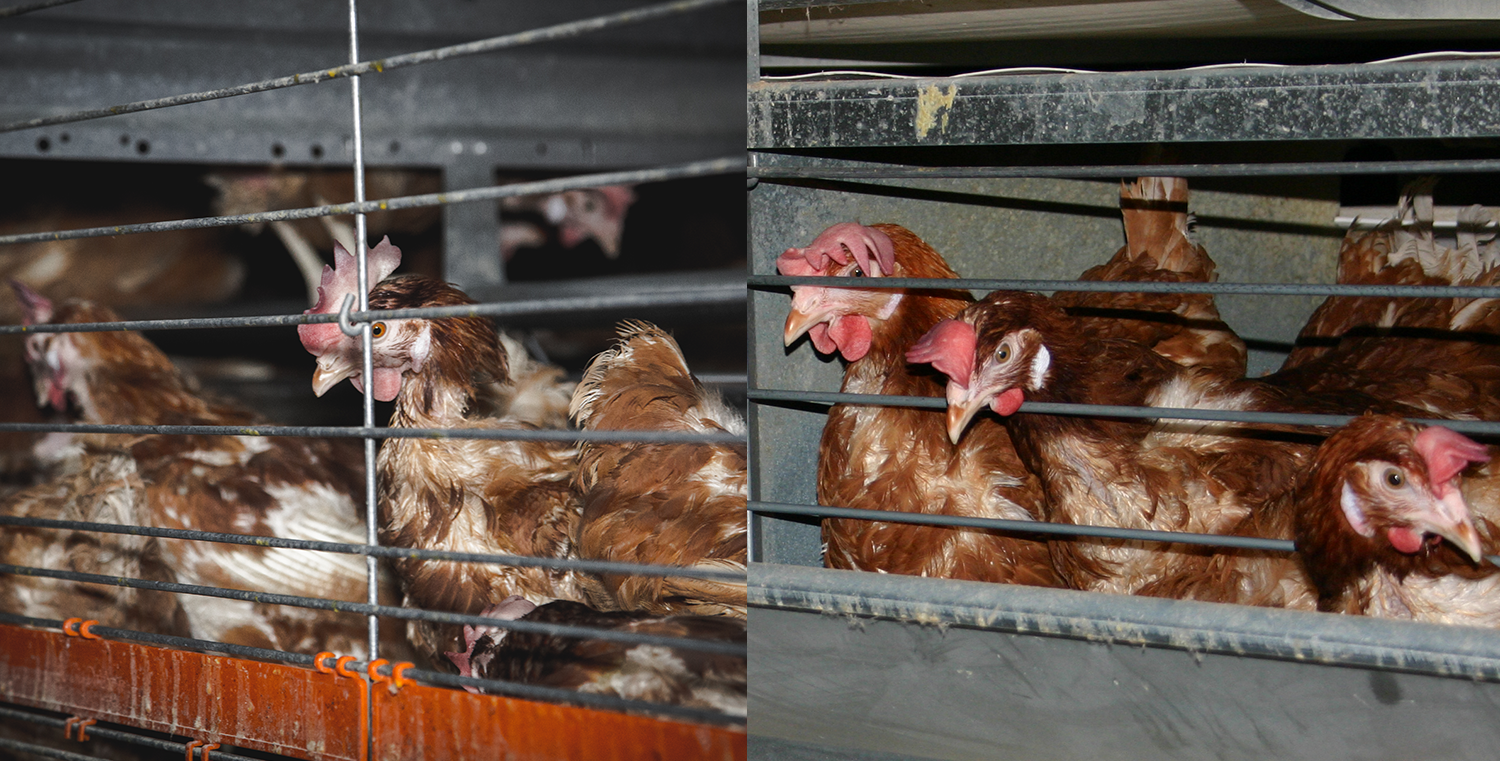
In 2012, the New Zealand Government announced a 10-year phase-out of battery cages. From 1 January 2023, they were officially banned. The industry’s solution? Move hens into larger colony cages. Same basic idea, different cage.
Life in a Battery Cage
Battery cages were among the most restrictive forms of animal confinement. Hens kept in these systems endured:
- Extreme overcrowding: Between five to seven birds were crammed into a single cage, with each hen given just 550 cm² of space – that’s less than the size of an A4 sheet of paper.
- Poor physical health: Brittle bones, fractures, foot conditions, metabolic disorders, cage layer fatigue, feather loss, and injuries from aggressive cage mates were just some of the health issues these birds endured.
- Short lives: Like all commercially farmed hens, battery-caged hens were slaughtered at around 18 months of age when their egg production declines and the industry considers them no longer profitable to keep.
- Barren living environment: Battery cages offered no opportunity for hens to explore, dustbathe, forage, nest, or otherwise engage with their surroundings.
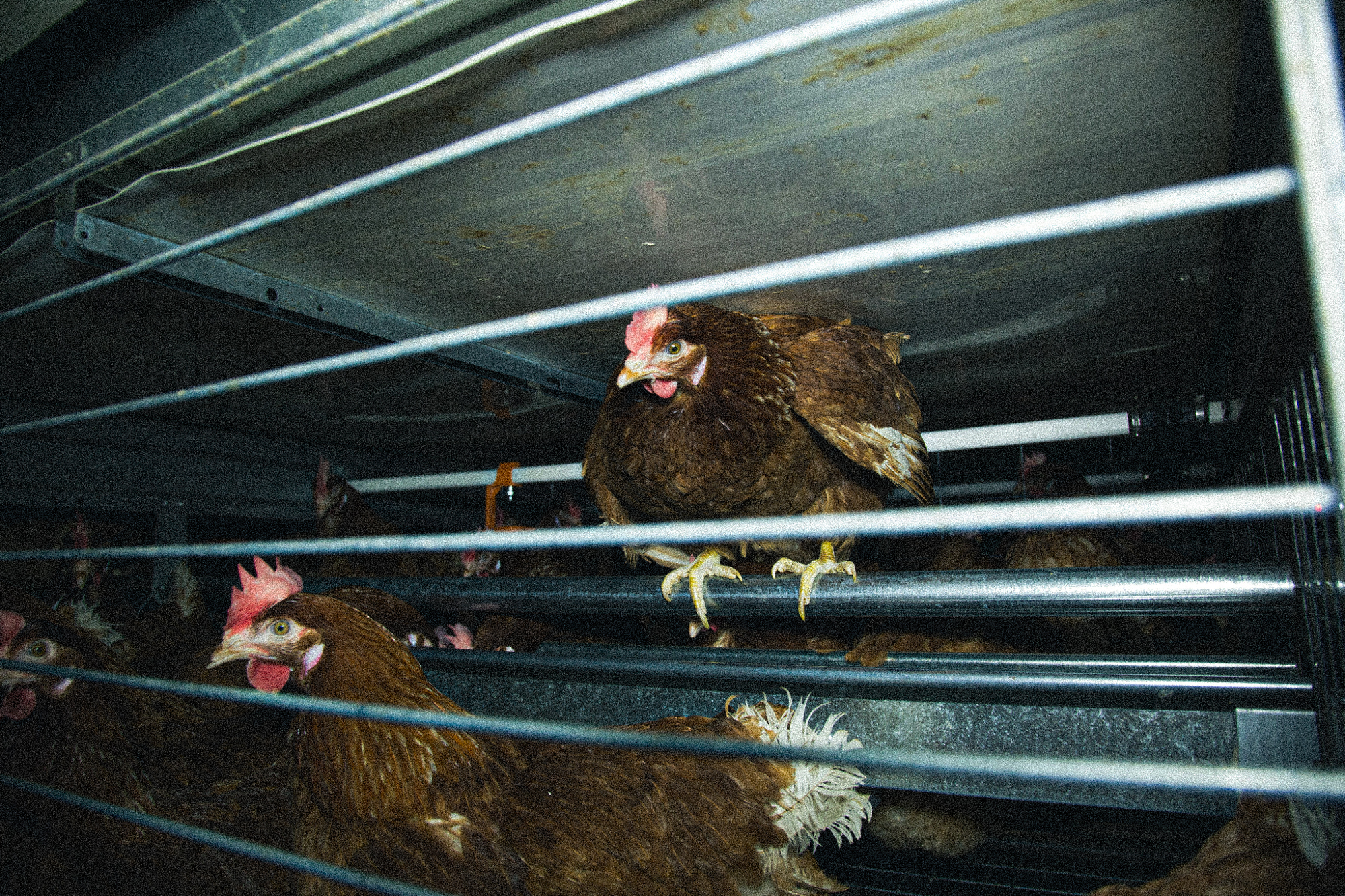
The replacement system came with a new name and a few added features, but the fundamental reality for hens remained: they were still confined to cages. Colony cages were designed to meet prescribed requirements for space, perches, nesting and scratching, yet they continue to severely restrict hens’ ability to move freely and engage with their surroundings. The result was a regulatory compromise that allowed the industry to continue cage confinement, rather than confronting whether cages themselves are compatible with the needs of hens.
Life in a colony cage
- No space for living: A single colony cage can contain up to 80 hens, with each bird allowed just 750 cm² of space – only slightly larger than an A4 sheet of paper.
- Widespread injury and illness: Brittle bones, fractures, foot conditions, metabolic disorders, cage layer fatigue, feather loss, and injuries from aggressive cage mates were just some of the health issues these birds endure.
- A life of suffering: Like all commercially farmed hens, colony caged hens are slaughtered at around 18 months of age, far younger than their natural lifespan, when their bodies could no longer keep up with the industry’s demand for egg production.
- Inadequate enrichment and restricted natural behaviours: Colony cages include metal perches, a rubber pad, and plastic flaps intended to mimic a ‘nesting area’. However, these features fall far short of replicating the natural living conditions required to support normal behaviours. With so many hens confined in an overcrowded space, access to these limited resources becomes highly competitive, leading to stress, frustration, and aggression.
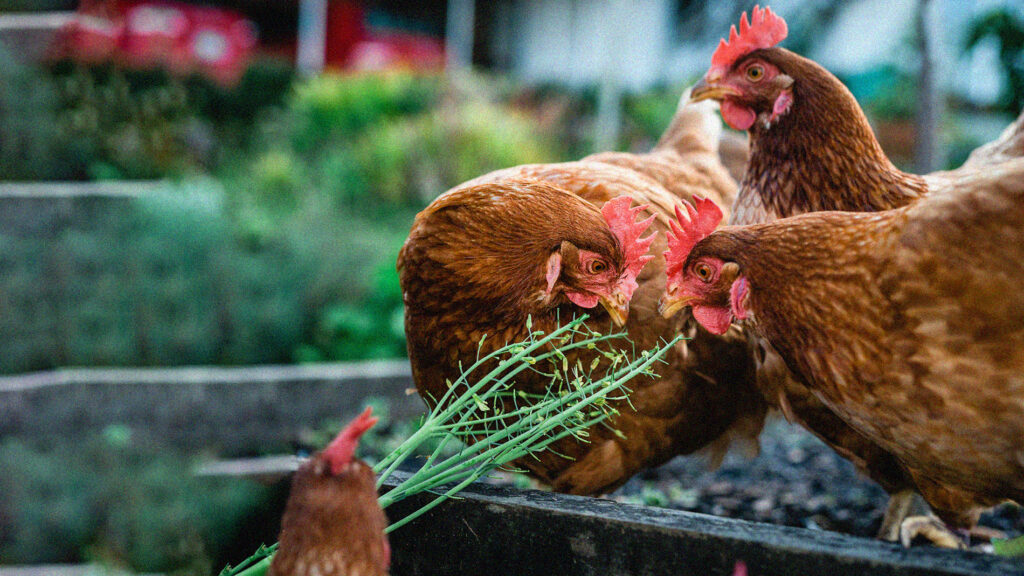
Normal behaviours of hens
Hens are intelligent, curious animals with a wide range of natural behaviours they are unable to express normally in colony cage systems. These include, but are not limited to:
- Roaming and exploring their surroundings
- Foraging, digging, and scratching at the earth
- Dust bathing to maintain feather health and control parasites
- Sunbathing for warmth and vitamin D – an essential vitamin for feather and bone health
- Nest building and nesting in a quiet, secure space