Introduction
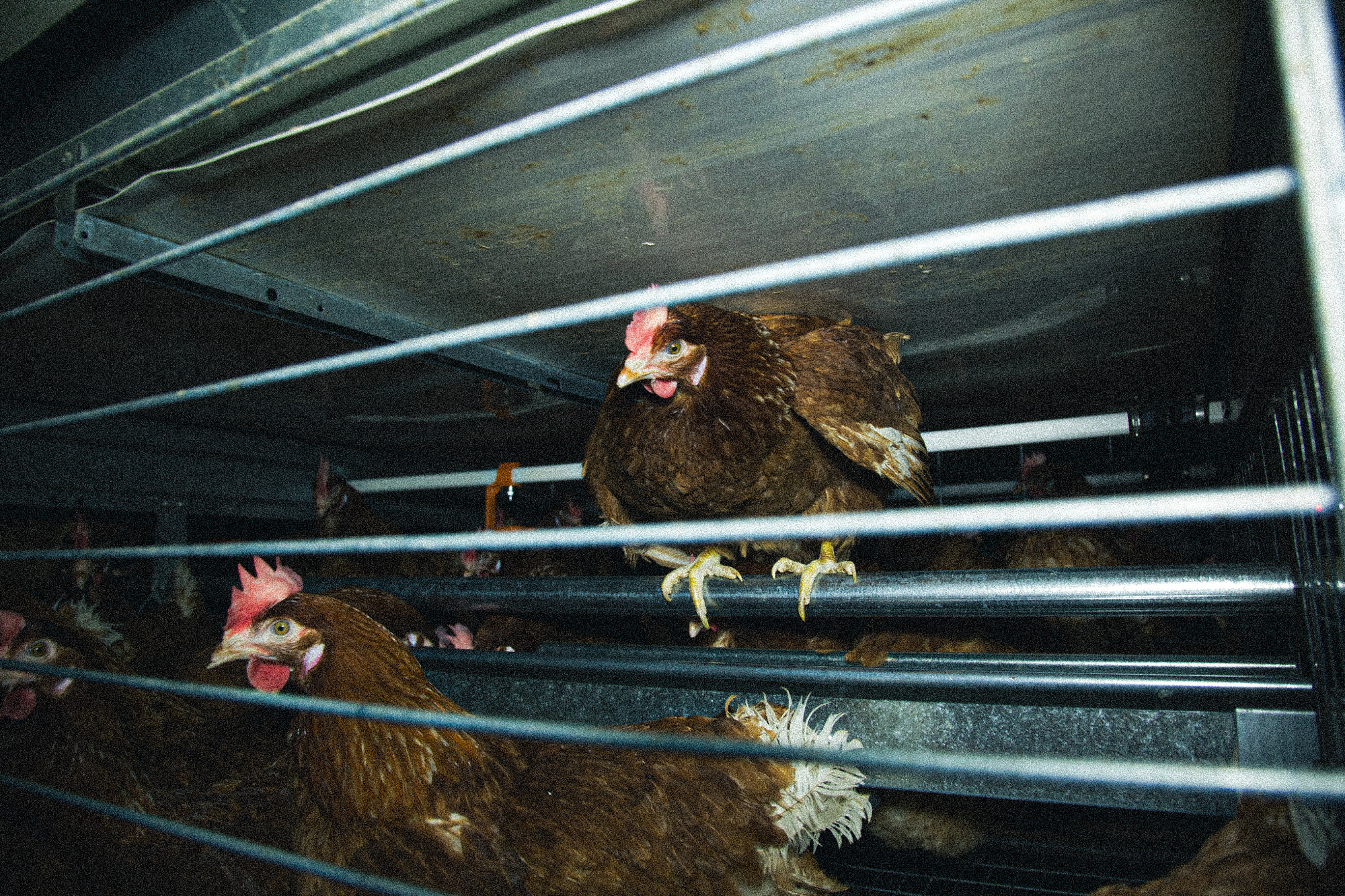
The New Zealand egg industry confines over 800,000 hens in cages annually according to the New Zealand Egg Producers Federation. The conditions within these cages are crowded and often stressful, with up to 80 birds confined within one cage; restricting each hen to a space roughly the size of an A4 sheet of paper.
Hens farmed in cages are prevented from performing many normal behaviours such as stretching their wings, moving freely, nest building, exploring, dustbathing, or foraging. They are farmed for a single purpose: egg production, with their quality of life treated as secondary to profit and productivity. Once their egg output declines, they are killed at just 18 months old — only a fraction of their natural lifespan.
Cage systems are now widely recognised as highly problematic method of egg production due to the significant and ongoing welfare harms they can cause. Public attitudes in New Zealand have shifted accordingly, with most New Zealanders supporting a legal ban on cage systems for egg-laying hens.
A growing number of businesses across New Zealand are removing cage eggs from their supply chains. Dozens of restaurants, food manufacturers, hospitality providers, and retailers have already stopped using or selling cage eggs, while many others have committed to phasing them out in the coming years.
Corporate commitments to stop supporting cruel animal products can play a significant role in ending the use of factory farming systems. Internationally, shifting consumer expectations and corporate sourcing policies have already driven significant reductions in cage use. In 2025, Sweden became the first country to phase out cage systems without legislation, demonstrating the impact corporate leadership and market demand can have in accelerating change for animals.
New Zealand has the opportunity to follow a similar path. By committing to no longer distribute cage egg products, businesses can play a direct role in ending the suffering of millions of hens while responding to growing public concern about the treatment of farmed animals.
Ending the caging of hens begins with leadership. By choosing to move away from the sale and distribution of cage egg products, businesses can help drive a shift towards a food system that no longer relies on the intensive confinement and exploitation of animals.
Public Sentiment on Animal Welfare in Aotearoa
Public concern about animal welfare remains strong in New Zealand. A December 2025 Verian poll found that 78% of New Zealanders are worried farmed animals experience suffering due to poor living conditions and inadequate care, with only 38% trusting the farming sector to prioritise animal welfare.1
The poll found that two-thirds of New Zealanders believe the term “animal cruelty” includes physical or mental suffering caused to animals by people. A similar proportion said animals should be recognised as sentient beings with legal protections or rights.
Two-thirds of New Zealanders feel strongly that people have a shared responsibility to protect animals from harm.
72% Believe animals should be given well above the minimum physical standards and mental enrichment to live.
Concern about animal welfare is also reflected in attitudes toward regulation. The same poll found that 85% of New Zealanders are concerned about the Animal Welfare Act requirements not always being upheld.
When asked specifically about cage systems, two-thirds of respondents said colony cages are unacceptable. Adding to this, 69% said it is unacceptable for hens to be kept indoors for their entire lives.
In addition, polling has revealed that 41% of Kiwis would be willing to reduce egg consumption to reduce harm to hens and 36% would consider purchasing plant-based egg alternatives instead of eggs.
It is clear that people care about protecting animals, and businesses and retailers play an important role in responding to these expectations by ensuring the products they sell align with evolving consumer values.
Public Sentiment on Egg Farming in Aotearoa
Most New Zealanders view common egg farming practices as unacceptable.
73% believe the instantaneous maceration of male chicks is unacceptable
The egg industry has no use for male chicks as they cannot be farmed for eggs, they are typically killed within a day of hatching by being dropped into a large blender while fully conscious. While the numbers are unknown, SAFE estimates as many as two million male chicks are killed this way annually in New Zealand.
69% believe it is unacceptable to keep hens indoors for their entire lives
Hens farmed in cages and barns are permanently confined within indoor factory farming systems. These birds cannot express many natural behaviours such as sun basking, dust bathing, foraging, nest building, roosting in trees, and freely exploring their environment. According to the egg industry, 60% of commercially farmed hens are permanently farmed indoors.
65% believe beak trimming is unacceptable
‘Beak trimming’ is a painful mutilation routinely performed on commercially farmed hens shortly after hatching. In an attempt to reduce pecking-related injuries caused by stressful, overcrowded factory farming conditions, up to 25% of a hen’s beak is amputated, typically without pain relief.
73% believe it is unacceptable to stock seven hens per square meter
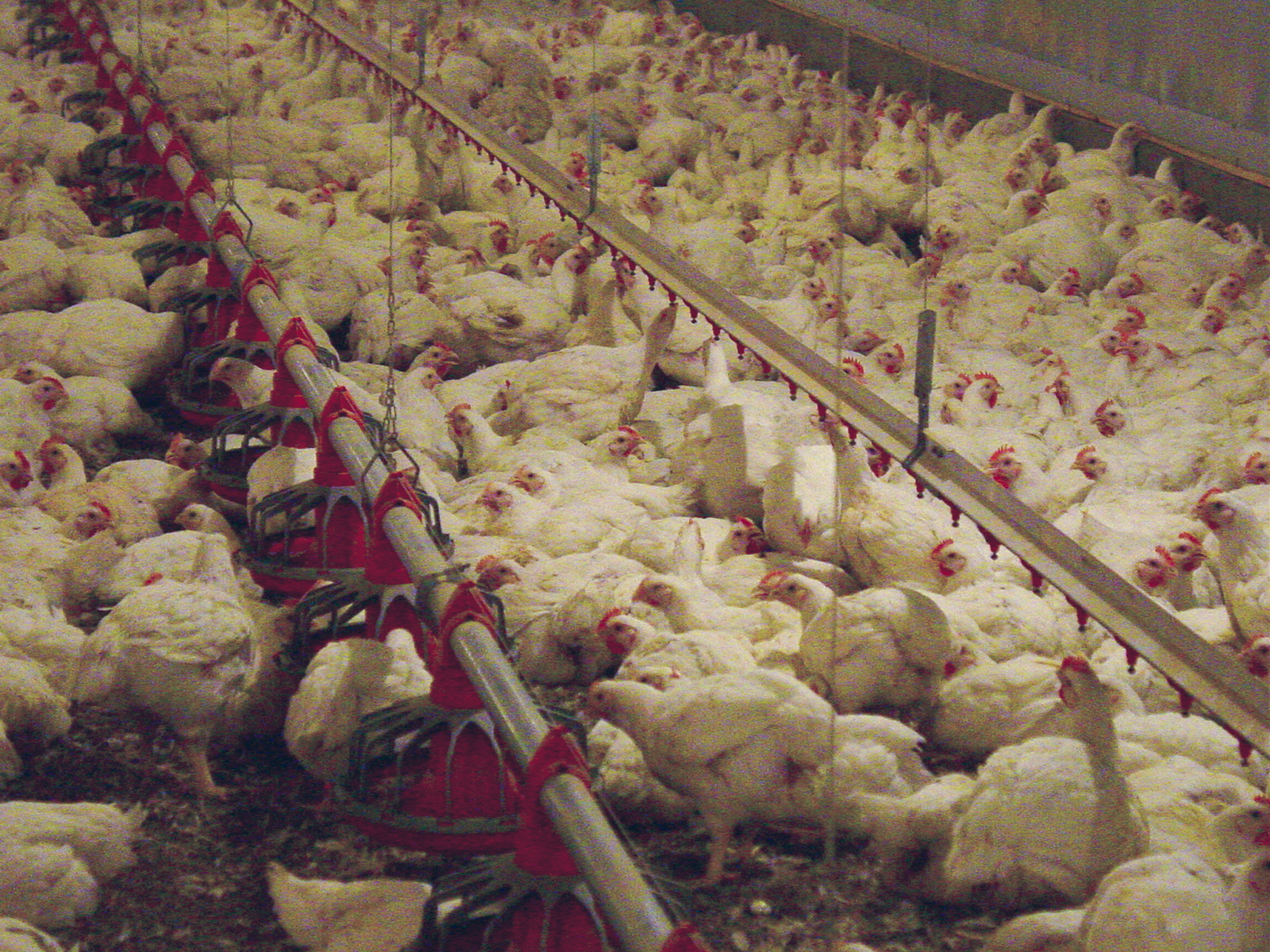
The New Zealand barn egg industry is permitted to keep hens in crowded living conditions. The Code of Welfare for Layer Hens allows up to seven hens to be kept in one square metre within indoor factory farm sheds. Even in free-range systems, overcrowding is permitted, with up to nine hens per square metre allowed within the sheds.
In August 2026, the National Animal Welfare Advisory Committee proposed changes to regulations that would increase stocking densities in indoor barn systems from seven hens per square metre to nine hens per square metre. At the time of writing this report, the final decision had not yet been announced.
51% of Kiwis do not know that hens farmed in barns cannot go outside
Confusing and unclear labelling may be a key driver of consumer misunderstanding. Some barn eggs are marketed with imagery of rolling green hills and paddocks or labelled with phrases such as “Hens Choice” and “Keep Me Free,” which may imply outdoor access.
43% think barns do not meet the welfare needs of hens
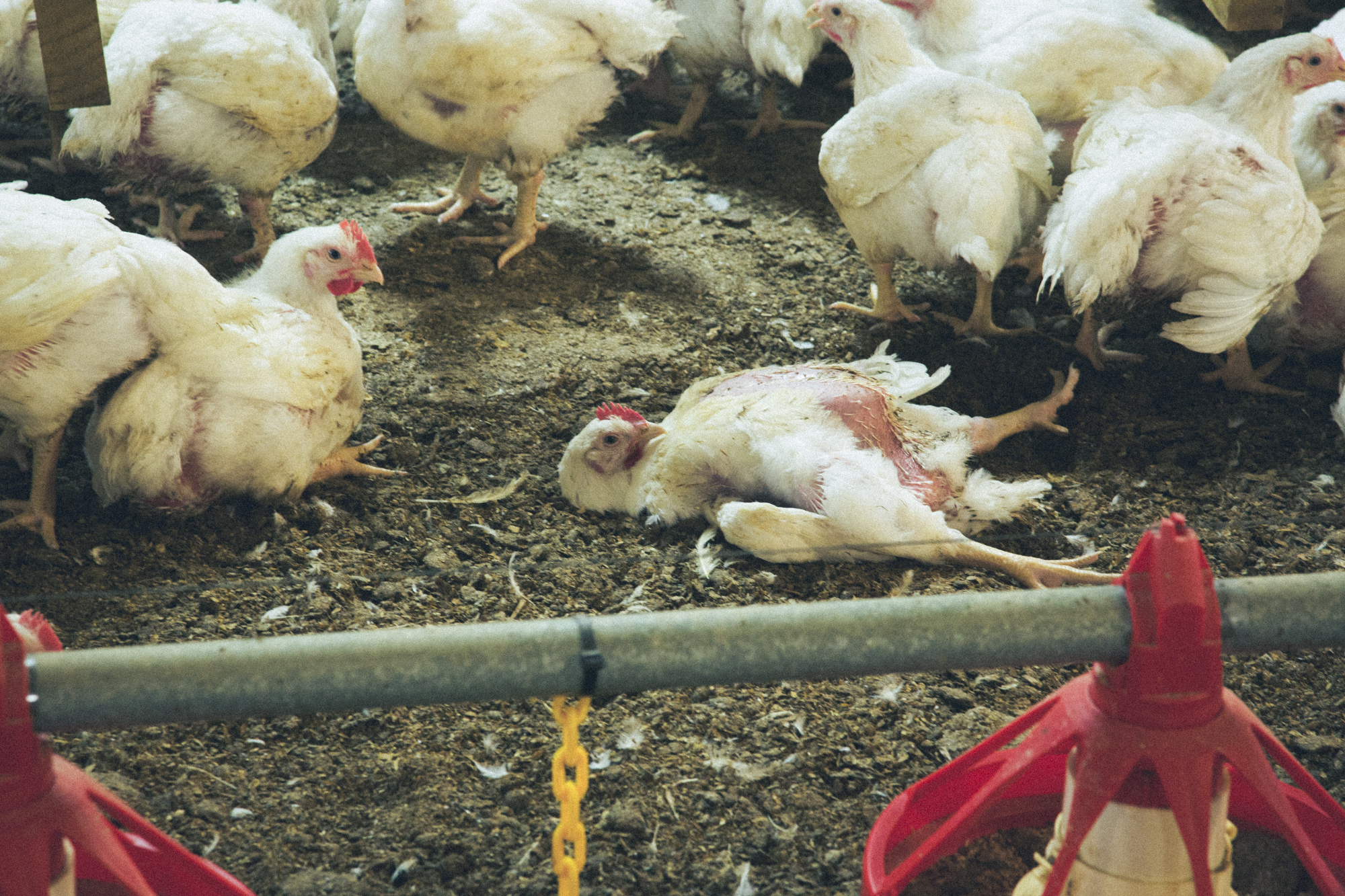
Barn systems may be perceived as a higher-welfare alternative to cages, but they still confine hens indoors for their entire lives. Birds are kept at high stocking densities in large sheds, which can restrict natural behaviours such as foraging, dustbathing, sun-basking and exploring. Crowded conditions within indoor systems may also contribute to stress, and aggressive behaviours such as feather pecking. The lifespan of barn farmed hens is also cut short at around 18 months of age.
Without access to the outdoors or meaningful environmental enrichment, barn systems continue to prioritise productivity over the needs of hens.
Across New Zealand, a growing number of businesses are taking action to remove cage eggs from their supply chains.
New Zealand Businesses Driving the Shift Away from Caging Hens
To date, SAFE has secured 96 commitments from Kiwi businesses to phase cage eggs from their products and food service operations. As of 2026, 43 businesses have already fully transitioned away from cage eggs, reflecting growing momentum away from inhumane sourcing practices across the food industry.
Many of these businesses operate nationally or through franchise networks, meaning their commitments influence sourcing decisions across a wide range of restaurants, cafés, supermarkets, and food manufacturers.
Fulfilled
- Woolworths Group New Zealand
- McDonald’s
- Burger King
- Mammoth Brand (including Pita Pit and Egg’d)
- George Weston Foods
- Delmaine Fine Foods
- Denny’s
- Icon Catering
- Abe’s Bagels
- Arnotts
- Bin Inn
- Breadcraft
- Brooke Serene, The George, and The Regent of Rotorua
- Bolton Hotel/Artisan Restaurant
- Burgerfuel
- Cake & Co.
- Ceres Organics
- Cobb & Co
- Cordis
- Columbus Coffee
- Esquires
- Food Envy
- Harbour Co-op
- Hell Pizza
- Jet Park Hotels
- King’s Plant Barn Cafe’s
- Mobil
- Moustache Cookies
- Mrs Macs Pies
- Nando’s NZ
- Nosh Catering
- Subway (100% cage-free worldwide)
- Te Papa Museum
- The Casual Foodie
- The Cheesecake Shop
- The Coffee Club
- The Rees Hotel
- Williams Hotel
The following companies previously confirmed they had successfully fulfilled their cage-free commitment, but were unavailable to provide comment on this when contacted by SAFE in 2025.
- Leader
- Robert Harris
- Scenic Hotel Group
- The Canape Company
- Wendy’s
In Progress
- Foodstuffs New World, Pak’nSave, Four Square, and On the Spot
- Bidfood
- Original Foods Baking Co.
- Service Foods
- Wyndham Hotels and Resorts
Commitments not met
- Cookie Time
- Night’n’Day
- Starbucks New Zealand
Woolworths New Zealand fulfils its cage-free commitment
SAFE extends its sincere congratulations to Woolworths New Zealand for successfully removing cage eggs from its supermarket shelves.
This is a significant achievement and marks a historic moment for New Zealand’s food industry. As the first major supermarket brand to withdraw support from the cage egg industry, Woolworths New Zealand has demonstrated strong leadership and a clear commitment to removing cruel products from its supply chain, setting a new benchmark for the industry.
“We committed to transitioning to cage-free eggs in 2017 for whole shell eggs, and expanded this goal to include egg as an ingredient in 2020. All of our stores have now achieved the cage-free transition for whole shell eggs, including for Woolworths Own Brand and Vendor Brands. We are also really pleased that by the end of 2025 we had transitioned more than 95% of egg as an ingredient in our Own Brand products to cage-free as well. We are continuing to work closely with our suppliers to transition the small amount of volume that remains.”
Woolworths New Zealand
Catherine Langabeer, Head of Sustainability
Collectively, these commitments demonstrate growing momentum towards a food system that no longer supports cruel factory farming systems. By moving away from cage eggs, these businesses are recognising both the significant animal welfare concerns associated with confining hens in cages and the evolving expectations of consumers.
We extend our sincere thanks and congratulations to all New Zealand cage-free commitment holders for their leadership in driving meaningful change for animals.
Supporting Progress Amid Challenges
While the majority of New Zealand cage-free policy holders have made significant progress toward fulfilling their cage-free commitments, a small number of businesses that previously committed to removing cage eggs from their supply chains have allowed their policies to lapse.
SAFE recognises that unforeseen challenges can arise, resulting in delays to supply chain transitions and commitment timelines. We encourage cage-free policy holders experiencing barriers to engage with us to discuss potential next steps. SAFE supports reasonable deadline extensions where additional time is required, recognising that continued progress – even at a slower pace than initially planned – remains a positive step for animals.
Since launching our cage‑free corporate campaign in 2016, only three of the businesses SAFE has engaged have chosen to withdraw their cage-free commitment. These businesses are Cookie Time, Night’n’Day, and Starbucks. This is disappointing, particularly given the vital role public commitments play in driving meaningful change within Aotearoa’s food system and ensuring accountability and transparency.
SAFE remains committed to working constructively with these businesses and will continue efforts to support and encourage progress toward the commitments they have made.
SAFE’s Campaign Against Misleading Cage Egg Labelling
When battery cages were finally banned across New Zealand on 1 January 2023, it marked the end of one of the country’s cruellest farming practices — and a moment worth celebrating.
However, SAFE soon became concerned about widespread confusion among both the public and the media. Feedback from supporters and media coverage suggested many New Zealanders believed all forms of cage hen farming had been phased out of use. This, unfortunately, was not the case. In 2023, around 1.2 million hens remained confined in what the industry calls “colony” cages.
At the time, eggs produced in these systems were marketed as “colony” or “colony laid,” with brands avoiding any reference to the word “cage” on their packaging.
SAFE believes this misunderstanding was further fueled by a misleading media release from the New Zealand Egg Producers Federation, which carried the headline: “No cage eggs to be produced after 31 December 2022.”
It is SAFE’s view that the use of the label ‘colony laid’ breaches the Fair Trading Act, as it deliberately misleads consumers and risks them unknowingly purchasing eggs from caged hens. SAFE’s concerns were substantiated by a 2024 poll, which revealed that the majority of participants did not understand ‘colony laid’ eggs are, in fact, cage eggs2. The poll found that:
- 84% of New Zealanders did not realise that “colony laid” eggs come from caged hens.
- 72% agreed that current egg labelling is misleading.
SAFE submitted a complaint to the Commerce Commission in January 2025, arguing that labelling eggs as “colony laid” or “colony eggs” fails to accurately describe the farming system used and may mislead consumers. SAFE maintained that such labelling could breach the Fair Trading Act 1986, which prohibits misleading or deceptive conduct in trade.
The complaint called for eggs produced by hens kept in cages to be clearly labelled using the word “cage”, enabling consumers to make informed purchasing decisions.
In support of the complaint, 10,781 New Zealanders signed an open letter calling for more transparent cage egg labelling. These signatures were submitted to the Commerce Commission in March 2025 as supplementary evidence.
In May 2026, the Commerce Commission confirmed to SAFE that these concerns were founded and that it had informed the New Zealand Egg Producers Federation that should these labels continue to be used there would be a risk of breaching the Fair Trading Act.
SAFE understands cage egg distributors are currently in the process of changing their packaging and labelling and we hope to see more accurate labelling featured on cage egg products before the end of 2026.
SAFE advocates for clear, honest labelling on all animal products to ensure New Zealanders have the information they need to understand how animals are farmed and treated.
We recommend that retailers and food service providers, including supermarkets, restaurants, and cafés, work proactively with producers and distributors to ensure they have clear, accurate information about the farming systems used for animal products.
All animal products should be accompanied by transparent, informative labelling or disclosures that truthfully reflect how animals are housed and treated. This approach supports greater transparency across the supply chain and enables both businesses and consumers to make informed decisions and meaningfully assess the products they purchase or serve.
The Decline of Caged Hen Farming Worldwide
Worldwide, around 180 million hens are farmed in cages each year. However, there is a growing global shift within the egg industry and animal welfare policy towards cage-free systems. As of July 2025, 92% of corporate cage-free commitments due by December 2024 had been fulfilled, demonstrating strong international progress away from cage systems.3
Europe
Europe has been at the forefront of the global transition away from cage egg production.
As of July 2025, 96% of corporate cage-free commitments with a deadline of December 2024 have been fulfilled across Europe.4
Public pressure and policy initiatives have played a major role in this progress. One of the most significant developments has been the “End the Cage Age” European Citizens’ Initiative, which gathered nearly 1.4 million signatures and called on the European Commission to phase out cages for farmed animals across the European Union.5
Following this initiative, the European Commission launched consultation on new legislation to ban caging hens and other farmed animals. The consultation, held between September and December 2025, received over 236,000 verified responses from across the world, demonstrating strong public interest in improving farmed animal welfare.6
Alongside EU-level discussions, many individual European countries have already introduced legislation or market transitions that will phase out cages in the coming years.
Sweden
In June 2025, Sweden became the first country in the world to eliminate all cage systems for hens without introducing legislation. Data obtained by Project 1882 from regional egg authorities confirmed that cages were no longer being used in Sweden.7
This transition was driven largely by market demand and industry change. As public expectations and corporate sourcing policies shifted, egg producers moved away from cages and toward cage-free systems.
Sweden’s experience demonstrates that significant change can occur through corporate commitments and consumer demand, even in the absence of formal legislation.
Slovenia
In July 2025, Slovenia announced that it would ban the use of cages for hens by the end of 2028. The reform was adopted by parliament as part of amendments to Slovenia’s Animal Welfare Act, with strong cross-party support 6.
Germany
Germany has introduced legislation that will effectively remove cage systems from egg production. Under the Animal Welfare Farm Animal Husbandry Ordinance, cages for hens must be phased out by 2025, although some farms may be granted limited exemptions extending to 2028.8
United Kingdom
The United Kingdom has also signaled its intention to phase out cages for hens.
The 2025 Animal Welfare Strategy for England, published by the Department for Environment, Food & Rural Affairs, outlines plans to prohibit the installation of new cages by 2027 and to fully phase out cage systems by 2032. Public consultation on these proposals closed in March 2026.9 10
The Animal Welfare Strategy for England states that;
“Good animal welfare is an issue that matters to the UK public, and we collectively have a moral duty to protect the welfare of animals we have control over and interact with.”11
“We are committed to working with the laying hen sector to move towards cage-free systems for all laying hens.”12
Additional European progress
Many other European nations have already introduced legislation to ban the use of cages or have taken significant steps towards cage-free egg production.
- Austria has banned the installation of new cages and requires existing systems to be phased out by 2030.13
- Czech Republic has legislated to ban cages for hens from January 2027.14
- Finland introduced a new Animal Welfare Act in 2024 which includes a complete ban on cages.15
- France has banned the installation of new cage systems16 and its egg market is now approximately 70% cage-free.17
- The Netherlands has largely transitioned away from cage systems through industry and retailer commitments, even without a formal legislative ban on colony cages.18
North America
As of July 2025, 77% of corporate cage-free commitments for policies with a deadline of December 2024 have been fulfilled across North America.19 Legislation in the United States has also played an important role in accelerating the transition away from cage systems. Several states have introduced laws ending the sale of cage eggs and the use of cage systems.
These include:
- Arizona (2022), which has legislated to prohibit the sale of eggs from caged hens from 2034.20
- California (2018), where Proposition 12 requires eggs sold in the state to come from cage-free systems.21
- Massachusetts (2016), where voters approved legislation banning the use of cage systems and requiring eggs sold in the state to be cage-free.22
- Michigan (2019), which requires eggs produced or sold by large farms to be cage-free.23
- Nevada (2021), which introduced legislation requiring eggs sold in the state to come from cage-free system.24
- Oregon (2019), which prohibits both the production and sale of eggs from caged hens.25
- Rhode Island (2018), which will require hens used for egg production to be kept in cage-free environments by 2026.26
- Utah (2021), which has committed to transitioning hens to cage-free environments by 2030.27
- Washington (2019), which requires all eggs sold in the state to come from cage-free systems by 2025.28
South America
As of July 2025, 90% of corporate cage-free commitments for policies with a deadline of December 2024 have been fulfilled across South America.29
Several countries in the region are making progress away from caging hens through both corporate commitments and industry change.
In Ecuador, the Loja region has already banned the sale and production of eggs from caged hens.30
In Brazil, two of the country’s largest egg producers have chosen to no longer use cage systems.31
Asia
As of July 2025, 86% of corporate cage-free commitments for policies with a deadline of December 2024 have been fulfilled across Asia.32
Several countries in the region have also begun introducing policies that support a transition away from cage farming systems.
In 2025, Indonesia introduced new animal welfare regulations that encourage the development of cage-free egg production.33
Israel has introduced regulations that will phase out cages for hens by 2037.34
In South Korea, a national transition toward cage-free egg production was originally scheduled for 2025 but has been extended to 2027 to allow producers more time to adapt.35
While cage systems remain widely used across parts of Asia, these developments demonstrate growing recognition of the need to improve welfare standards for laying hens.
Africa
As of July 2025, 88% of corporate cage-free commitments for policies with a deadline of December 2024 have been fulfilled across Africa.36
In 2024, it was estimated that almost 40% of egg production across Africa were cage-free.
Corporate leadership has played a key role in this transition. For example, Famous Brands, the largest restaurant group in Africa, achieved its cage-free commitment in 2022 — three years ahead of schedule. Early adoption by large food companies demonstrates the influence that corporate commitments can have in driving improvements in animal welfare standards across supply chains.
Conclusion
Momentum away from cage egg sourcing is growing both internationally and within New Zealand, reflecting a broader shift in expectations around the treatment and use of animals in food production. Across the world, governments, businesses, and consumers are increasingly rejecting cage eggs, recognising the need to transition away from practices that intensively confine animals for production.
In New Zealand, many companies have already removed cage eggs from their supply chains or are committed to doing so in the coming years. These commitments demonstrate that change is possible and that businesses play an important role in shaping a more transparent and ethical food system.
Public attitudes are also shifting. Polling consistently shows that the majority of New Zealanders find factory farming systems and practices unacceptable.
SAFE welcomes and encourages any business or food service provider not mentioned in this report that has made — or plans to make — a cage-free commitment to contact us so their progress can be recognised in future updates.
Endnotes
- Appendix 1: Verian poll December 2025 ↩︎
- Appendix 2: Colmar Brunton 2020 poll ↩︎
- Open Wing Alliance. (2025). ‘OWA Cage-Free Egg Fulfillment Report 2025’. ↩︎
- Open Wing Alliance. (2025). ‘OWA Cage-Free Egg Fulfillment Report 2025’. ↩︎
- European Citizens’ Initiative. (2025). ‘End the Cage Age’. ↩︎
- European Commission. (2025), ‘Public Consultation’. ↩︎
- Project 1882. (2025). ‘Sweden becomes cage-free – Project 1882 celebrates historic victory’. ↩︎
- Federal Ministry of Justice and Consumer Protection. (2001). ‘Ordinance on the Protection of Farm Animals and Other Animals Kept for the Production of Animal Products in Their Keeping (Animal Welfare Farm Animal Husbandry Ordinance)’. ↩︎
- Department for Environment, Food & Rural Affairs. (2025). ‘Animal welfare strategy for England’. ↩︎
- Department for Environment, Food & Rural Affairs. (2026). ‘Cage reform: proposed ban on keeping laying hens, pullets and breeder layers in cages’. ↩︎
- Department for Environment, Food & Rural Affairs. (2025). ‘Animal welfare strategy for England’. ↩︎
- Department for Environment, Food & Rural Affairs. (2025). ‘Animal welfare strategy for England’. ↩︎
- Unnamed. (2025). ‘Is the end of cage rearing for laying hens in sight in the European Union? What will the coming years hold for breeders?’. ↩︎
- Ministerstvo Zemědělství (Minister for Agriculture Czech Republic). (2020). ‘The ban of laying hens in cages by the Czech Republic’. ↩︎
- Uotila, L. (2024). ‘What is the new animal welfare act in Finland?’. ↩︎
- Fournier, C. (2025). ‘Written question no. 7524: Prohibition of cage farming’. ↩︎
- McDougal, T. (2024). ‘Poland lagging in cage-free commitments’. ↩︎
- Unnamed. (2025). ‘Is the end of cage rearing for laying hens in sight in the European Union? What will the coming years hold for breeders?’. ↩︎
- Open Wing Alliance. (2025). ‘OWA Cage-Free Egg Fulfillment Report 2025’. ↩︎
- Pallotta. (2020). ‘Michigan Becomes Latest State to Ban Eggs from Caged Hens’. ↩︎
- Chang, A. (2023). ‘The is what Prop 12 means for animals’. ↩︎
- Cage Free Laws. (2025). ‘Status of Massachusetts Question 3’. ↩︎
- Michigan Secretary of State. (2019). ‘Enrolled Senate Bill No. 174’. ↩︎
- Nevada Department of Agriculture. ‘Cage-free requirements to sell eggs & egg products in Nevada’. ↩︎
- Oregon Department of Agriculture. (2025) ‘Egg Laying Hens’. ↩︎
- LegiScan. (2018). ‘Rhode Island House Bill 7456 (Prior Session Legislation)’. ↩︎
- Cage Free Laws. (Unknown) ‘Utah Code Title 4’. ↩︎
- Secretary of State, State of Washington. (2019). ‘Substitute House Bill 2049’. ↩︎
- Open Wing Alliance. (2025). ‘OWA Cage-Free Egg Fulfillment Report 2025’. ↩︎
- Change.org. (2021). ‘Loja es la segunda ciudad #LibreDeJaulas de Latinoamérica’. ↩︎
- Sarfas, A.J. (2024). ‘What does cage-free progress look like around the world?’. The Humane League. ↩︎
- Open Wing Alliance. (2025). ‘OWA Cage-Free Egg Fulfillment Report 2025’. ↩︎
- Dwiyanto, S. (2026). ‘Animal welfare regulations issued, opening wider opportunities for cage-free egg development’. ↩︎
- Surkes, S. (2022). ‘Cages for laying hens banned from new coops, to be phased out in existing ones’. ↩︎
- Eunmo, G. (2025). ‘‘Cage Regulation’ Delayed for Two Years…Egg Prices Expected to Remain High for Now’. ↩︎
- Open Wing Alliance. (2025). ‘OWA Cage-Free Egg Fulfillment Report 2025’. ↩︎
References
Beyond Cages: The Role of Business in Aotearoa’s Cage-Free Future