We’ve normalised milk so completely that it’s easy to forget that a milk-producing cow was actually a recently pregnant mother. To make milk, cows must give birth. And for us to drink their milk, their babies can’t be part of the equation.
It’s a brutal reality, but a systematic practice that urgently requires our attention.
Why? Because these animals are sentient. In fact, New Zealand’s animal welfare legislation explicitly recognises animal sentience – the capacity to experience positive and negative states.
And although dairy is an uncomfortable conversation – with the dairy industry being so tied to our national identity – it’s one we need to get more comfortable having.
The short lifecycle of a bobby calf can help us understand this system on a deeper level. Because when we recognise the sentience of animals, and the cruel practices we’ve made routine, we can better understand how our food systems have an impact on them.
First: What is a ‘bobby calf’?
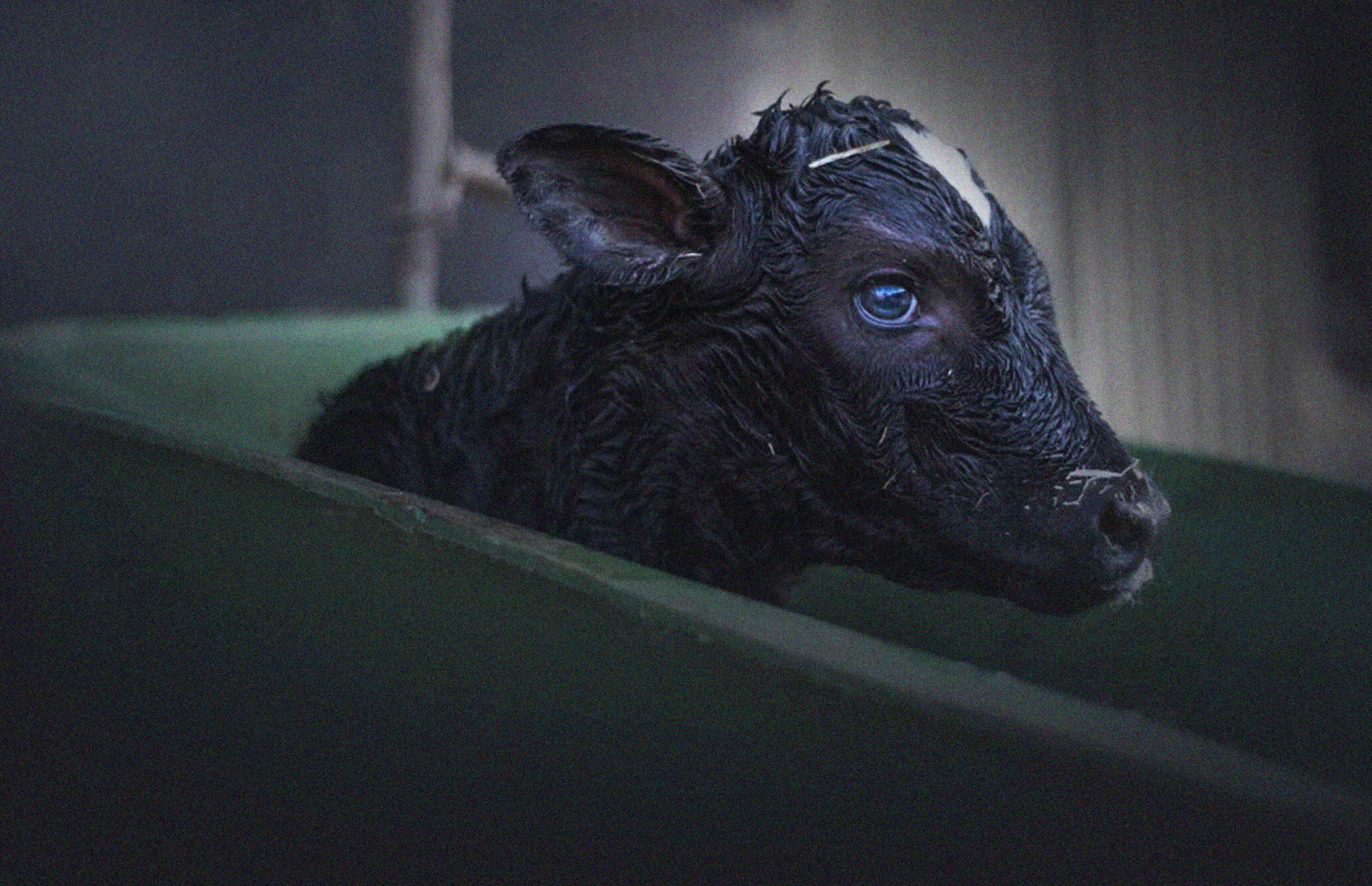
A ‘bobby calf’ is a dairy calf intended for ‘processing’ within approximately the first week of their life. (Processing in the dairy industry means the calf will be killed.)
These calves are surplus to the dairy industry’s needs, being mostly boys and unneeded females. Calves must legally be four days old in New Zealand before they’re killed, and under New Zealand regulations, they must also have fully healed (dry, shrivelled) navels and have firm hooves before they can be legally transported for slaughter.
Here’s what the first – and last – days of these two million lives look like.
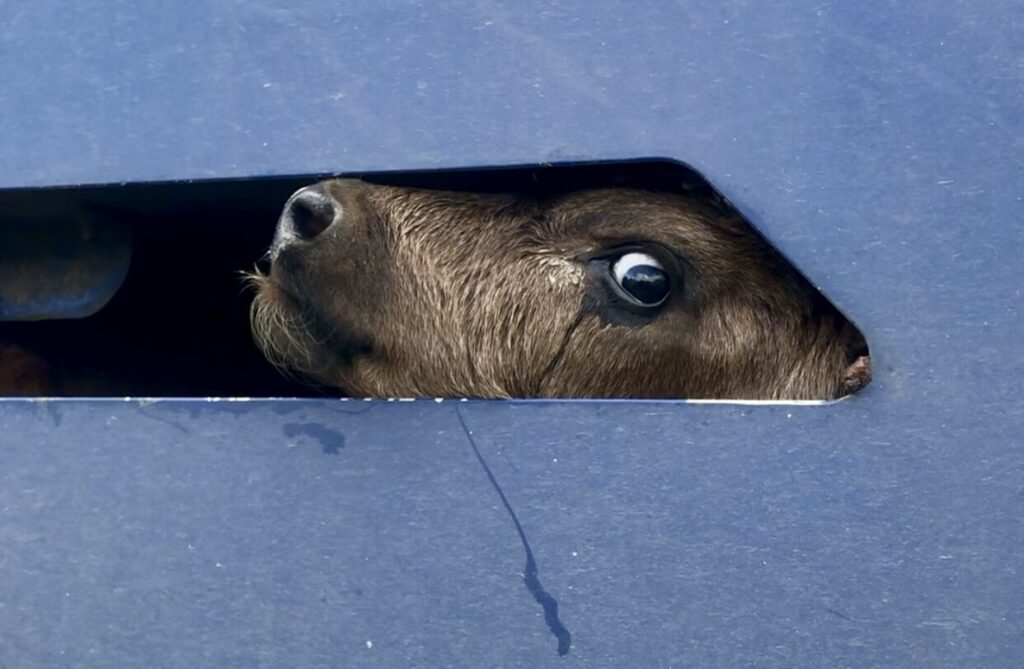
The day they’re born.
A mother cow is pregnant with her baby for around nine months, just like us.
When her calf is born, she has a strong biological drive to care for them, just like human mums do. Like all mammals, cows have oxytocin, progesterone, estrogen, and prolactin. They’re reproductive hormones that are physiologically fundamental.
One to remember is oxytocin, which is otherwise known as the ‘bonding hormone’. Cows, like other mammals, experience this form of bonding with their babies as soon as their baby begins feeding.
Dairy NZ itself explains that for cows to be artificially milked, oxytocin is needed to encourage milk ‘let-down’. So in the milking shed, the cow’s teats are generally stimulated mechanically, to simulate the sucking motion of their baby.
The longer cows spend with their babies, the stronger their bond gets. But on many dairy farms, this chance for a close relationship is short-lived.
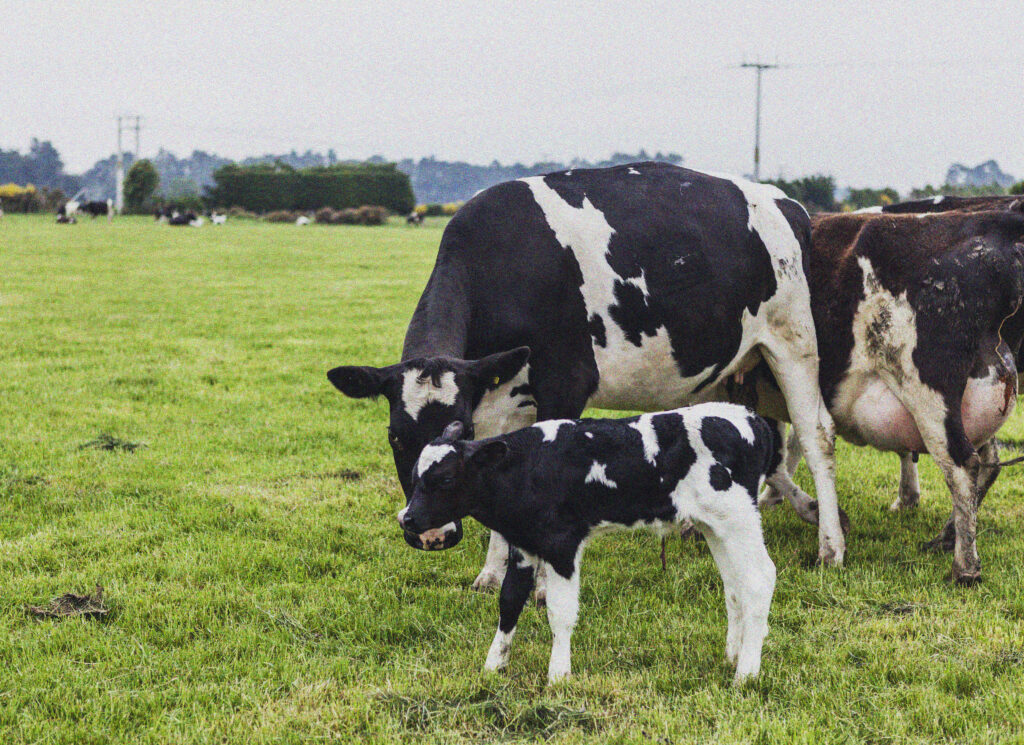
A calf’s first guzzle of milk.
The calf’s first feed is especially important. Just like human babies drink colostrum, cows make colostrum for their young, too. The first milk produced after birth contains antibodies and nutrients essential to protecting a newborn calf from disease.
New Zealand’s Code of Welfare: Dairy Cattle states that newborn calves must receive sufficient colostrum or a suitable substitute. It recommends that every calf receive at least two litres, and preferably four litres, as soon as possible after birth, preferably within the first six hours.
But after those first feeds, the calf will no longer be able to be nursed by their mum in a conventional dairy system.
Instead, these calves are artificially reared on milk or milk replacer and eventually introduced to solid feed as they develop.
However, bobby calves drink milk for usually less than a week. They’re slaughtered as infants, before they’re even weaned.
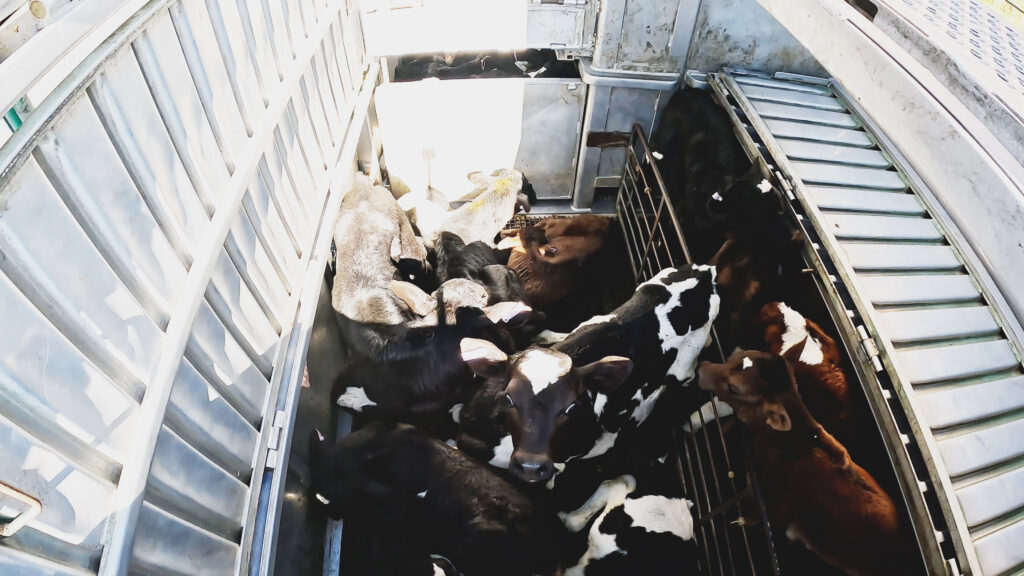
Four days old.
For bobby calves, life can change dramatically at just four days old.
New Zealand ‘Code of Welcare – Dairy Cattle prohibits a young calf from being transported off the farm for sale or slaughter until they are at least four full days – 96 hours – old. They must also meet strict fitness requirements, including being able to stand, walk, bear weight evenly on all four limbs, and protect themselves from being trampled or injured by other calves.
So a calf can be just four days old when they’re loaded onto a truck and sent away from the farm.
The maximum permitted journey time for a young calf is 12 hours from loading until arrival at the final destination.
For such a young animal, that can be a significant journey.
MPI itself recognises that young calves are particularly vulnerable to the stresses of transport. Research commissioned by MPI has found that standard steel flooring can contribute to bruising, reduced lying time and increased fatigue in young calves.
One study examining calves at 12 New Zealand meat-processing premises also found that more than 60% of the calves observed showed signs of some degree of dehydration, while nearly 40% had some faecal soiling.
The 24-hour rule.
There’s another little-known aspect of this system.
If a young calf arrives at a slaughter facility, MPI regulations require them to be slaughtered as soon as possible after arrival.
If it isn’t possible to slaughter them within 24 hours of their last feed on the farm, they must be fed before slaughter, provided they are able and willing to feed. The regulations specify that they must receive a volume of colostrum, milk or milk replacer equivalent to at least 5% of their body weight, and then be slaughtered as soon as possible.
In other words, the regulations allow a young calf to potentially go many hours without a milk feed while being transported and waiting for slaughter.
The Animal Welfare Act requires people responsible for animals to provide for their physical, health and behavioural needs, including adequate food and water and the opportunity to display normal patterns of behaviour.
Yet a bobby calf can’t feed from their own mother, they can’t remain beside her for protection, and they’re removed from her almost immediately after birth.
What about the other 60% of calves?
The non-bobby calves may have longer lives, but this doesn’t mean they aren’t subjected to the same underlying system of production.
The other 60% of calves may replace their mums in the milking herd or be reared for beef.
For female calves kept as ‘replacements’, the cycle of cruelty will eventually begin again.
They’ll be bred, they’ll give birth, their baby will be taken, and then they’ll enter the milking herd.
But whether a calf lives for days, months or years, their lives are ultimately shaped by what the dairy industry requires from them.
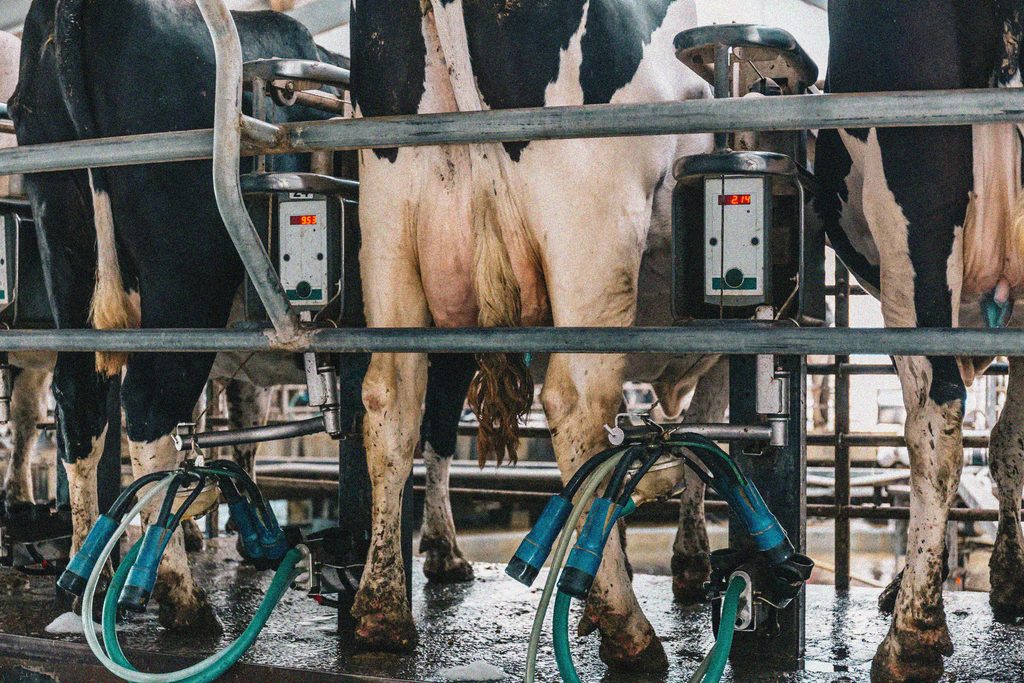
And what about the mother cows?
While her calf’s life may end within days, the reproductive cycle of a dairy cow continues.
Dairy cows are bred so that they calve and produce milk. In New Zealand, artificial insemination is widely used as part of dairy breeding programmes, with professional artificial-breeding technicians carrying out the majority of inseminations.
The average gestation length is 282 days, after which the cow gives birth and begins lactating.
After giving birth, her milk is mechanically collected from her body, then her baby will be fed other milk or a milk replacer.
This cycle can continue for several lactations, until she is also killed.
The industry calls this a production cycle. But from the cow’s perspective, it involves repeated pregnancies, births, lactations, and separation from her calves.
A calf is more than a “byproduct.”
The dairy industry needs cows to give birth in order to produce milk. But it doesn’t need every calf those cows produce as a replacement for the milking herd.
This is why bobby calves exist.
They are sometimes described as a byproduct of dairy production. But there’s nothing byproduct-like about an animal experiencing their first days of life, only for their future to be snuffed out.
They are sentient newborns, capable of experiencing positive and negative emotions. New Zealand’s animal welfare framework explicitly recognises this.

A kinder source of calcium
A calf doesn’t get to choose the short life they’re born into. But we can choose what we do or don’t support.
Choosing plant-based milk means choosing not to participate in a system where a calf can be born as a consequence of milk production, separated from their mother, and killed while still a newborn.
Whatever your choice of plant milk, and however you like it in your cuppa, each alternative is kinder, more environmentally friendly, and (in our opinion), tastier than its dairy counterpart.